The "Lazy Asset" Syndrome: Is Your Equity Sleeping?
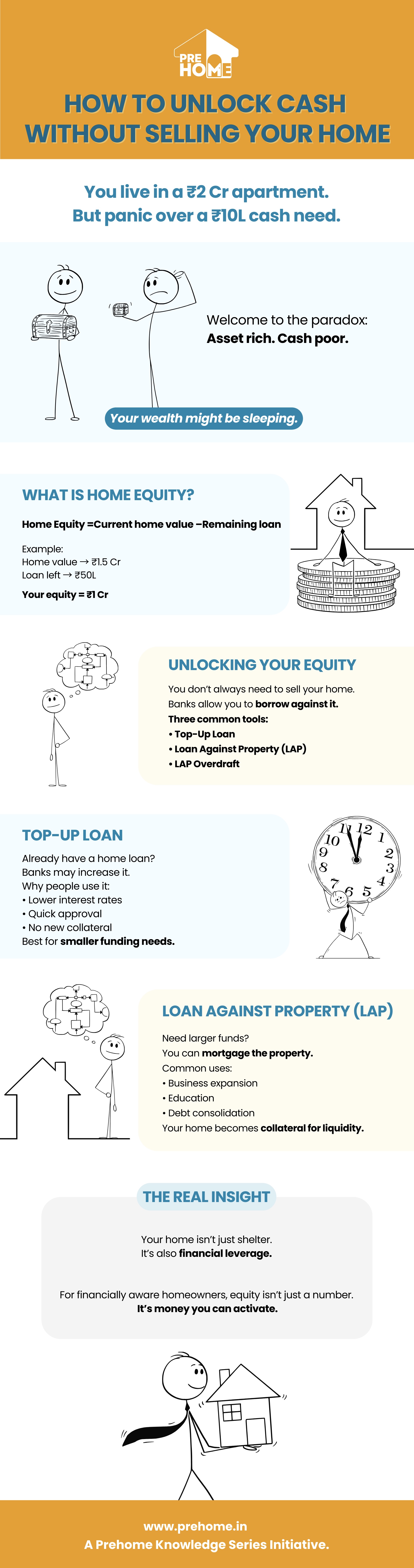
In Topic 12, we looked at how to exit your real estate investment by selling. But what if you want to stay where you are? What if you love your home but need the money tied up in it? Many Indian homeowners face a financial paradox: They are "Asset Rich, but Cash Poor." You might live in a ₹2 Crore apartment but stress over a ₹10 Lakh business crisis. The wealth is there, but it is inactive. We call this the "Lazy Asset" Syndrome.
1. The Concept of "Home Equity"
Equity is the current market value of your home minus the loan you owe.
-
- The Math : If your home is worth ₹1.5 Crores today and your remaining home loan is ₹50 Lakhs, you have ₹1 Crore in equity.
- The Problem : That ₹1 Crore is earning 0% interest. It is dormant capital.
- The Solution : Pre-empt the friction : Financial leverage lets you access that cash without selling your home or moving out.
2. The Arsenal: Three Ways to Unlock Liquidity
You don’t have to sell to access your money. The financial system offers three ways to tap into your equity:
-
- Top-Up Loans : If you have an active home loan and a good repayment history, banks will gladly “top-up” your loan amount. This is the quickest and cheapest way to get money.
- Loan Against Property (LAP) : If your home is fully paid off, or if you need a large sum (e.g., ₹50 Lakhs+), you can mortgage your property to a bank.
- Loan Against Property (Overdraft Variant) : Some banks also offer an overdraft option on a Loan Against Property, allowing you a limit but charging interest only on the amount used. However, this option is less common and usually for borrowers with high credit scores.
Your home is not just a place to live; it is a vault. For homeowners who understand finances, equity is not just a number on paper—it is cash that can be used when necessary.
In Our Next Series :
Borrowing against your home sounds powerful, but leverage carries risks. Let’s look at the numbers before you sign any documents. Blog 38 The Math of Leverage: LAP vs. Top-Up vs. Personal Loans